

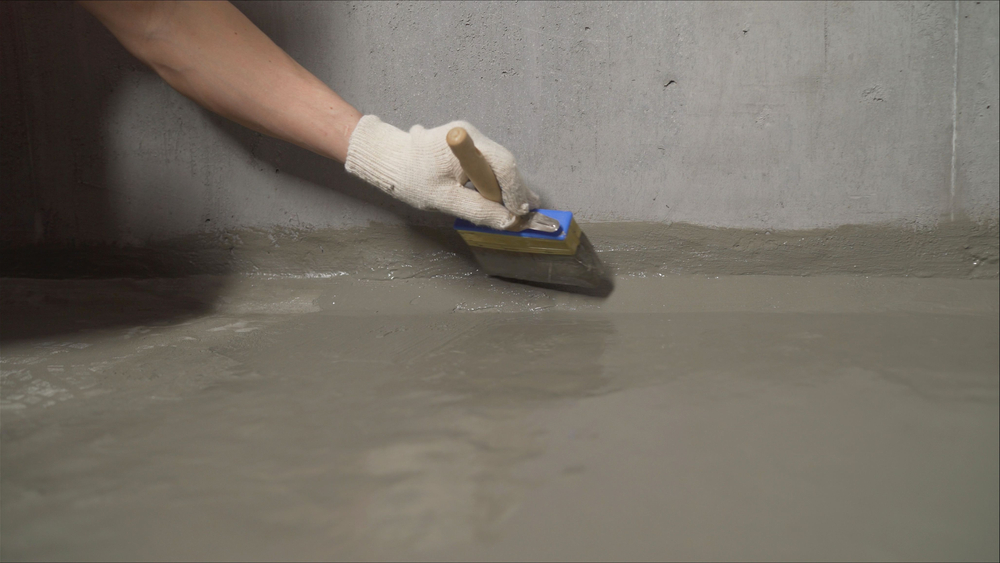
A damp basement can affect much more than the space below your home. In Kingsport, periods of rain, humid conditions, sloped properties, and water moving through the soil around a foundation can make basement moisture a concern for homeowners. Left unaddressed, that moisture can affect building materials, usable space, indoor comfort, and the conditions that influence air quality throughout the house.
Quick answer: Basement waterproofing helps protect your Kingsport home by controlling unwanted water and moisture before they contribute to deterioration, musty conditions, mold-friendly environments, or loss of usable basement space. Keeping a basement or below-grade area drier can help preserve the condition and usefulness of the property while improving the environment beneath the living areas.
What local homeowners should know
-
Basement moisture is not limited to visible standing water. Damp walls, condensation, musty odors, and efflorescence can all indicate a moisture problem.
-
Homes near areas such as Ridgefields, Meadowview, Lynn Garden, and Colonial Heights can differ considerably in elevation, drainage, foundation design, and exposure to runoff.
-
Kingsport’s proximity to the Holston River, Bays Mountain, and surrounding Appalachian terrain makes drainage around an individual property especially important.
-
Waterproofing is most effective when the source and path of the water are identified rather than simply covering visible symptoms.
-
A dry-looking basement can still have elevated moisture, so odors and recurring dampness deserve attention even without obvious flooding.
Why Basement Waterproofing Matters to Kingsport Homes
Basement waterproofing matters to Kingsport homes because controlling below-grade moisture can protect foundation-adjacent materials, preserve usable space, and reduce damp conditions beneath the living area. Local properties range from established homes in Lynn Garden to houses around Ridgefields, Colonial Heights, and newer residential areas, so there is no single moisture solution that fits every foundation.
Kingsport sits within the Appalachian landscape of Northeast Tennessee, with neighborhoods ranging from areas overlooking or near the Holston River to communities around Bays Mountain. Local topography means water can behave differently from one lot to the next. A house on a slope may deal with runoff moving toward the foundation, while another property may struggle with poor grading, saturated soil, or drainage components that no longer perform effectively.
At Go Dry Waterproofing, we look at basement moisture as a building and drainage problem that should be understood before a solution is selected. Our goal is to help homeowners identify where unwanted moisture is coming from and determine the appropriate way to manage it.
Local Conditions Can Put Pressure on Basements
Local terrain, rainfall, drainage, and humidity can all contribute to basement moisture problems in the Kingsport area. Water naturally follows gravity, which means grading, slopes, roof drainage, soil conditions, and the location of a foundation can determine how much water reaches below-grade walls.
The City of Kingsport’s neighborhood information illustrates just how varied the local landscape is. Ridgefields sits between Bays Mountain and the Holston River, while Meadowview is at the base of Bays Mountain. Colonial Heights extends south of the central city near Warriors’ Path State Park. These differences matter because the way water approaches a foundation is highly property-specific.
From a waterproofing perspective, homeowners should pay particular attention after extended wet periods. A basement that remains dry during ordinary weather but develops damp spots, seepage, or odors following heavy rain is giving you useful information about how water behaves around the house.
How Basement Moisture Can Affect Home Value
Basement moisture can affect home value by reducing usable space, damaging materials, and creating conditions that prospective buyers may view as an unresolved property concern. A basement does not need to experience major flooding for moisture to become an issue. Recurring dampness can affect finishes, stored belongings, flooring, drywall, wood, and other materials.
For many homeowners, the basement represents valuable square footage. It may contain storage, mechanical equipment, a workshop, laundry facilities, or finished living space. If homeowners cannot confidently use that space because water appears after storms or the room consistently smells damp, part of the home’s practical usefulness is diminished.
Visible water staining or recurring moisture can also raise questions during a future sale. Addressing the source before cosmetic repairs are made provides a more sensible long-term approach than repeatedly repainting or replacing moisture-damaged finishes.
How a Damp Basement Can Affect Indoor Air Quality
A damp basement can affect indoor air quality by creating humid, musty conditions that may support mold growth and allow odors or airborne contaminants from the lower level to reach other parts of the home. Moisture control therefore matters even when the basement is unfinished or rarely used.
Basements are connected to the rest of a house through stairways, wall cavities, penetrations, ductwork, and normal air movement. Treating the basement as completely separate from upstairs living spaces can overlook that connection.
Moisture itself does not automatically mean mold is present. However, persistent dampness creates conditions in which mold can grow when other necessary conditions are present. Controlling the moisture source is therefore an important part of maintaining a healthier indoor environment.
If you notice persistent musty odors, visible suspected mold growth, or respiratory concerns, moisture correction may be only one part of the response. Appropriate indoor air quality or mold professionals may also be needed depending on the conditions.
Warning Signs Your Basement May Need Waterproofing
Common warning signs of a basement moisture problem include water stains, musty odors, damp walls, visible seepage, and recurring moisture after storms. Kingsport homeowners should pay attention to patterns because when and where moisture appears can help identify its source.
Watch for:
-
Water entering where the basement wall meets the floor
-
Damp or dark areas on concrete or masonry walls
-
White, powdery mineral deposits on masonry
-
Peeling paint or damaged basement finishes
-
Musty odors that return even after cleaning
-
Condensation or consistently high basement humidity
-
Water appearing after heavy or prolonged rainfall
-
Damaged boxes, furniture, flooring, or other stored materials
One isolated damp spot does not necessarily tell you what repair is required. Recurring symptoms are a stronger reason to investigate the source.
When Should You Call a Basement Waterproofing Professional?
You should call a basement waterproofing professional when moisture repeatedly returns, visible water enters the basement, finished materials are being damaged, or basic exterior drainage corrections do not solve the problem. Professional evaluation is particularly useful when you cannot determine whether the water is coming through a wall, floor joint, crack, or another route.
Homeowners can safely perform several initial checks. Look for clogged gutters, downspouts releasing water beside the foundation, soil that slopes toward the house, and obvious places where runoff collects.
DIY investigation should stop when the problem involves significant water intrusion, foundation concerns, electrical hazards, suspected mold contamination, or repairs requiring excavation or specialized waterproofing systems.
Common Causes of Wet Basements in Kingsport
The most common causes of wet basements in Kingsport involve surface drainage, groundwater or saturated soil, foundation openings, and inadequate moisture management. More than one factor can be present, so identifying the actual water path is essential before choosing a repair.
1. Poor exterior drainage
Water that collects beside the foundation has more opportunity to find a path into below-grade areas. Improper grading and concentrated runoff can make the problem worse.
2. Gutter and downspout problems
Roof water should be directed appropriately away from the foundation. Clogged gutters, disconnected downspouts, or poorly placed discharge points can concentrate large amounts of water beside basement walls.
3. Hydrostatic pressure and saturated soil
As soil around a foundation becomes wet, water can exert pressure against below-grade construction and seek openings into the basement.
4. Foundation cracks and penetrations
Cracks and other openings can provide pathways for moisture. The appropriate response depends on the location, cause, and nature of the opening.
5. Interior humidity and condensation
Not every wet-looking basement surface is caused by exterior water intrusion. Warm, humid air contacting cooler basement surfaces can produce condensation, making proper diagnosis important.
How to Help Prevent Basement Water Problems
You can help prevent basement water problems by managing roof runoff, maintaining positive drainage around the foundation, monitoring humidity, and checking the basement after wet weather. Spring and other rainy periods are especially useful times for Kingsport homeowners to see how their drainage system performs.
Keep gutters clear and confirm that downspouts discharge appropriately. Walk around the home during or shortly after rainfall, when it is safe to do so, and look for pooling water near the foundation.
Inside, monitor for new stains, dampness, odors, and condensation. A dehumidifier may help control indoor humidity, but it should not be treated as a substitute for correcting active water intrusion.
What Results Can You Expect From Basement Waterproofing?
Effective basement waterproofing should reduce or control the specific source of unwanted water or moisture identified during the evaluation. The exact result depends on the cause, foundation type, drainage conditions, and waterproofing approach selected for the property.
For some homes, the solution may focus on controlling water that reaches the foundation. Other situations may require an interior drainage strategy, sump system, crack-related repair, vapor or moisture control, or a combination of approaches.
The important distinction is between managing the source and hiding the symptom. New paint or flooring can make a basement look better temporarily, but those improvements do not stop an underlying water problem.
Common Basement Waterproofing Mistakes
The biggest basement waterproofing mistakes involve treating visible symptoms without identifying why water is reaching the basement. That approach can lead Kingsport homeowners into repeated cleanup and repair cycles.
Mistake: Painting over a damp wall.
Consequence: The wall may look cleaner temporarily while moisture continues behind or through the surface.
Better approach: Determine where the moisture originates before refinishing.
Mistake: Assuming a dehumidifier solves seepage.
Consequence: Humidity may decrease while liquid water continues entering.
Better approach: Separate humidity control from water-intrusion correction.
Mistake: Ignoring exterior drainage.
Consequence: Water may continue collecting beside the foundation.
Better approach: Inspect gutters, downspouts, grading, and runoff as part of the overall diagnosis.
A Common Kingsport Basement Scenario
A common local scenario is a basement that seems fine during dry weather but develops a damp odor or water along a wall after several periods of rain. This is a representative scenario, not a specific Go Dry Waterproofing project.
Imagine an established home near Lynn Garden, Rock Springs, or Ridgefields. The basement has been used for storage for years, but the homeowner begins noticing damp boxes and staining near one wall after wet weather.
Cleaning the area addresses the immediate mess, but the problem returns during another rainy period. At that point, the pattern suggests that investigating exterior drainage and the route of moisture entry is more useful than continuing to replace damaged belongings or finishes.
Which Waterproofing Solutions May Help?
The right waterproofing solution depends on how water reaches the basement, so diagnosis should come before choosing a system. Our approach is to connect the solution to the moisture source rather than assume every damp basement needs identical work.
Potential service solutions can include drainage improvements, interior water-management approaches, sump-related solutions, moisture-control measures, and repairs to specific water-entry points, depending on the property.
DIY vs. Professional Basement Waterproofing
DIY maintenance works best for simple prevention, while recurring water intrusion usually warrants professional diagnosis and waterproofing. Cleaning gutters or checking downspouts is very different from designing a system to manage water entering a basement.
| Option | Best Suited For | Limitation |
|---|---|---|
| DIY drainage checks | Routine maintenance and obvious runoff issues | May not identify below-grade causes |
| Dehumidification | Managing indoor humidity | Does not stop active seepage |
| Cosmetic coatings | Appearance improvements in appropriate dry conditions | Can hide rather than correct moisture |
| Professional waterproofing evaluation | Recurring seepage, unexplained dampness, or persistent moisture | Requires property-specific assessment |
For local homeowners, the best starting point is understanding whether the problem originates outside, through the foundation, from below the slab, or from indoor humidity.
Basement Waterproofing Service Areas Around Kingsport
Basement waterproofing is relevant throughout Kingsport and surrounding Northeast Tennessee communities where below-grade moisture affects homes. We can help property owners in the local service area evaluate basement water and moisture concerns.
What Does Ignoring Basement Moisture Cost?
Ignoring basement moisture can lead to repeated material damage, reduced usable space, persistent odors, and more extensive repairs if the underlying problem continues. The longer water reaches vulnerable materials, the more opportunities it has to affect flooring, wall finishes, stored belongings, and other components.
Waiting also makes it easier to normalize a problem. A musty smell after every storm may seem minor until visible damage develops.
For homeowners planning to finish a basement, sell a property, or make other improvements, addressing recurring moisture first can help protect the money being invested elsewhere in the home.
FAQ About Basement Waterproofing in Kingsport
Is basement waterproofing worth it in Kingsport, TN?
Basement waterproofing can be worthwhile when a Kingsport home has recurring seepage, dampness, or moisture that threatens usable space or building materials. The value depends on the cause and severity of the problem. Correcting an actual moisture source can protect future improvements and reduce repeated cleanup or replacement of damaged materials.
Why does my Kingsport basement smell musty even when I cannot see water?
A musty basement can indicate persistent moisture even when standing water is not visible. Humidity, condensation, damp masonry, hidden wet materials, or past water intrusion can all contribute. Homeowners should look for patterns after rainy weather and consider having recurring odors investigated rather than relying only on air fresheners.
Do homes near Bays Mountain have special basement drainage concerns?
Homes around Bays Mountain can have property-specific drainage concerns because slope and elevation influence how runoff moves across a lot. Meadowview, Ridgefields, and other nearby areas vary substantially from property to property. The important factor is whether grading and drainage direct water toward or safely away from the individual foundation.
Can basement moisture affect air upstairs?
Yes, basement conditions can influence the rest of a home because the basement and upper living areas are not completely isolated from one another. Air can move through stairways, penetrations, wall cavities, and other openings. Controlling persistent basement moisture can therefore support better overall indoor environmental conditions.
Does every wet basement in Sullivan County need the same waterproofing system?
No, wet basements in Sullivan County can require different solutions because moisture may come from runoff, saturated soil, cracks, drainage problems, or indoor condensation. A system should be chosen after the likely source and route of the moisture are identified. Matching the solution to the cause helps avoid unnecessary or ineffective work.
Should I waterproof before finishing my Kingsport basement?
Recurring moisture should be addressed before finishing a Kingsport basement. Installing drywall, flooring, trim, or furnishings before resolving a known water problem can put those new materials at risk. Monitoring the basement through wet weather and correcting active moisture issues first provides a better foundation for future improvements.
Can gutters really contribute to a wet basement?
Yes, poorly managed roof runoff can contribute to basement moisture when water is discharged too close to the foundation. Homeowners should keep gutters clear, check downspout connections, and observe where roof water goes during rainfall. Correcting obvious surface drainage is a sensible first step before assuming the problem is entirely underground.
What should I check after heavy rain in Kingsport?
After heavy rain, check basement walls and floor edges for dampness, stains, seepage, or new odors, then inspect the exterior for pooling water and drainage problems. Pay attention to recurring locations. A consistent pattern after storms can give a waterproofing professional valuable clues about where water is approaching or entering the foundation.
Protect the Space Beneath Your Kingsport Home
A dry basement supports more than storage or finished square footage. Managing unwanted moisture can help preserve building materials, make below-grade areas more usable, and reduce damp conditions that can affect the environment throughout your home.
We help local homeowners understand where basement moisture is coming from and which waterproofing approach fits the property.
Protect Your Home Value and Create a Drier Basement
Addressing recurring basement moisture now can help protect your home, your usable space, and the indoor environment above it.